Isnin, Februari 17

Hari Fitting Bra

Assalamualaikum dan Salam 1 Malaysia =) 

Makluman untuk semua, pada 23 Feb 2014 (Ahad), Pusat Sumber Kanser Payu Dara Hospital Universiti Sains Malaysia (HUSM) akan mengadakan Hari Fitting Bra kepada pesakit-pesakit yang menghidapi kanser payu dara. Sehubungan dengan itu, semua dijemput hadir ke Pusat Sumber Kanser Payu Dara HUSM untuk membuat pemeriksaan lanjut. Untuk sebarang pertanyaan boleh hubungi kami di talian 097674056 atau lawati kami di Pusat Sumber Kanser Payu Dara HUSM. 

Marilah kita sama-sama melindungi wanita dan keluarga agar bebas dari kanser payu dara ~ 


Ahad, Februari 16

PEMBUNUH UTAMA WANITA !!


Assalamualaikum & Salam 1 Malaysia =)


Ramai yang sudah mengetahui bahawa kanser payudara adalah PEMBUNUH UTAMA 
kaum wanita. Ia biasanya menyerang wanita dalam kalangan umur 20-an dan ke atas.
Menurut statistik sekitar 2002 dan 2003, sebanyak 31 peratus wanita diserang kanser ini
berbanding penyakit-penyakit lain.

Dianggarkan sekurang-kurangnya 1 per 19 % seseorang wanita itu akan mendapat kanser
 payudara dalam hayat mereka. Hampir separuh dari wanita yang di diagnosis
mengidap kanser payudara mendapat berita ini pada usia kurang dari 50 tahun.

KANSER PAYU DARA


  • Barah merupakan antara kumpulan penyakit yang terjadi daripada tindakan sel yang bertindak di luar tabiat asalnya. Pada kelumrahan serta sifat sedia asalnya, sel-sel ini akan membuat pembahagian dengan kadar yang terkawal serta dihasilkan mengikut keperluan tubuh seseorang individu.
  • Apabila kadar penghasilan sel melebihi keperluan, ianya akan menghasilkan lebihan tisu. Lebihan tisu ini jugalah yang dikenali sebagai ketumbuhan. Ketumbuhan ini boleh dibahagikan kepada dua jenis ketumbuhan iaitu benign (tumor bukan barah) dan malignan (tumor jenis barah). Jenis ketumbuhan yang pertama iaitu benign adalah merupakan ketumbuhan yang tidak membahayakan nyawa para penghidapnya. Hampir 80 peratus daripada para penghidap ketumbuhan payudara adalah dari kalangan mereka yang mengalami ketumbuhan jenis ini.
  • Barah payudara adalah merupakan ketumbuhan malignan yang terjadi daripada tindakan sel yang bermula dari bahagian payudara. Ianya berkembang melalui proses pembahagian yang melebihi kadar keperluan organ serta seterusnya menyerang organ serta tisu-tisu yang berhampiran. Sel-sel barah ini juga mampu untuk membebaskan dirinya daripada ketumbuhan asal sekali gus memasuki saluran darah serta sistem limfa. Inilah juga cara serta kaedah penyakit barah payudara menyerang bahagian-bahagian organ lain para penghidapnya. Proses penjangkitan ini juga dikenali sebagai metastasis.
Penyebab sebenar kanser payudara tidak di ketahui. Faktor-faktor berikut mungkin menambahkan risiko wanita menghidap kanser payu dara:
  • Usia meningkat
  • Mempunyai ahli keluarga yang menghidap kanser payudara
  • Telah mendapat kanser pada satu payudara.
  • Mula datang haid awal (sebelum umur 12 tahun) atau putus haid lewat (selepas umur 50 tahun)
  • Tidak pernah melahirkan anak atau melahirkan anak pertama pada umur melebihi 30 tahun.
  • Mengambil jenis makanan yang mengandungi banyak lemak haiwan.

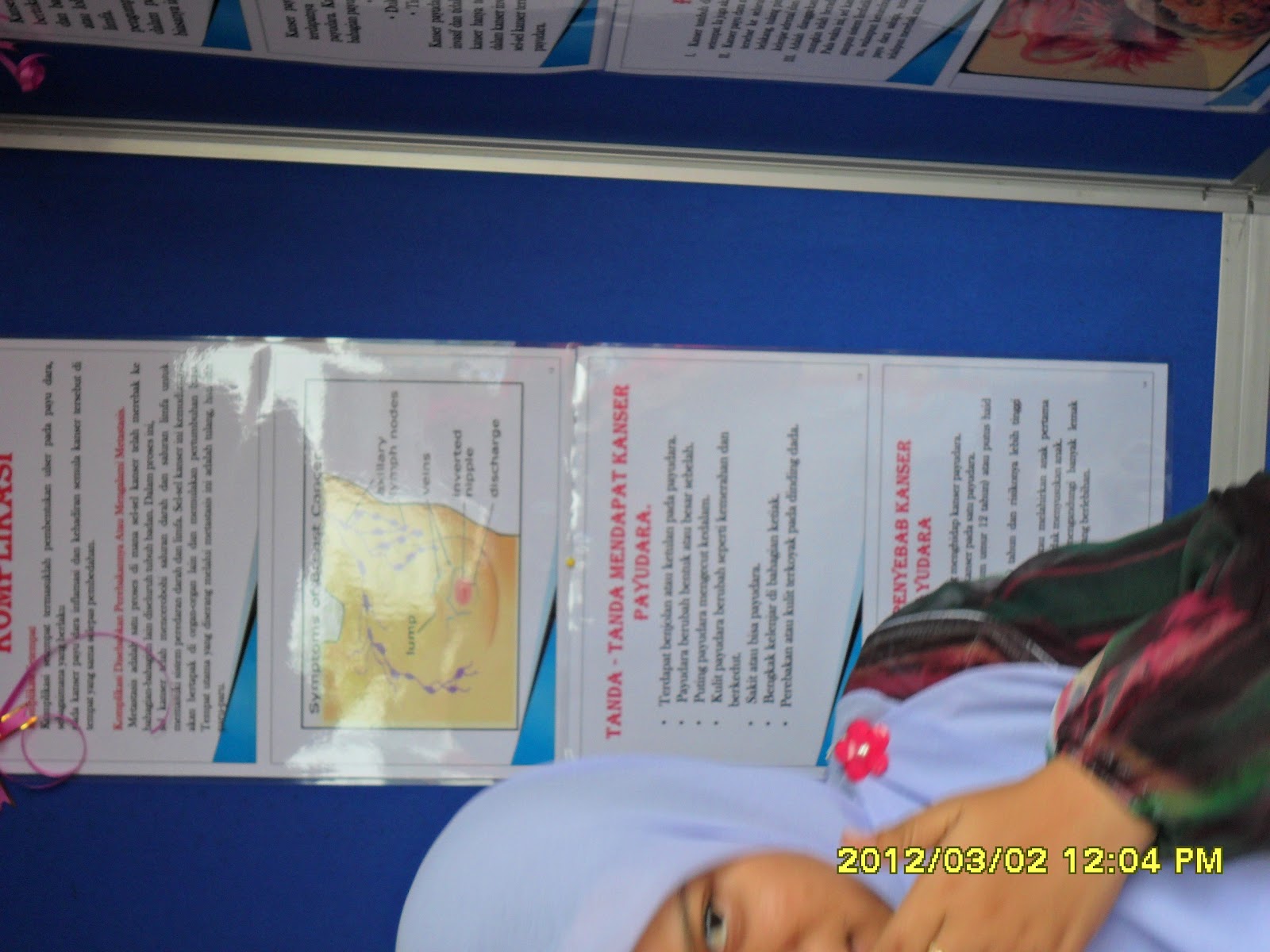
 Simptom-simptom yang dialami:


  • Puting berdarah
- Penghasilan cecair daripada puting adalah normal dan biasanya ia berlaku akibat masalah payudara yang tidak mudarat. Keadaan boleh jadi membimbangkan sekiranya puting berdarah.
  • Ruam di bahagian putting.
- Ruam di bahagian ini dan persekitaran kulitnya juga boleh menjadi simptom serangan kanser payudara. Ruam di puting atau kawasan persekitaran puting boleh terjadi akibat daripada ekzema.
  • Putting tertarik ke dalam
- Puting tertarik ke dalam adalah satu keadaan normal dan semula jadi pada sesetengah wanita. Walau bagaimanapun sekiranya keadaan ini baru berlaku dan terjadi tanpa sebab, anda harus berjumpa doktor.


Kanser payu dara ini boleh dibahagikan kepada 4 tahap iaitu:
  1. Tahap  1
    Pada peringkat ini, ketumbuhan barah adalah dalam ukuran sebesar 2 cm ataupun kurang daripadanya. Dalam tahap ini, sasaran serangannya adalah terhad kepada bahagian payudara sahaja.
  2. Tahap 2
    Pada tahap serta peringkat yang kedua ini, ukuran ketumbuhan barah payudara akan meningkat antara 2 cm hingga 5 cm. Selain daripada bahagian payudara, ia turut menjadikan nodus limfa (yang terdapat pada bahagian bawah ketiak) sebagai sasaran serangannya.
  3. Tahap 3
    Saiz ketulan barah payudara berukuran 5 cm. Pada peringkat ini, barah payudara sudah melibatkan nodus limfa ketiak, kulit ataupun otot yang terdapat di bawahnya (otot bahagian dada).
  4. Tahap 4
    Pada peringkat serta tahap ini, serangan barah ini akan menjalar kepada bahagian serta organ-organ yang terletak agak jauh daripada bahagian payudara. Antara bahagian yang menjadi sasaran serangan barah payudara pada peringkat ini ialah nodus limfa pada leher, paru-paru, hepar ataupun tetulang penghidapnya.

Rawatan yang boleh dilakukan bagi menangani kanser payudara ialah :


Rawatan termasuk pembedahan, rawatan radiasi, rawatan hormon dan kemoterapi. Perlu diingati bahawa pengesanan awal kanser payudara bererti rawatan lebih berkesan dan mungkin boleh dipermudahkan dan pembedahan konservatif boleh dijalani. Pembedahan konservatif adalah merujuk kepada pembuangan sebahagian daripada payudara sahaja, iaitu, bahagian di mana kanser berada. Mastektomi merupakan pembedahan di mana seluruh payudara “dibuangkan”.


Pembentukan semula payudara boleh dijalankan untuk mereka yang melalui mastektomi. Perbincangan mengenai ini harus berlaku awal-awal lagi sebelum terapi yang lain bermula. Ini membolehkan perancangan rawatan anda secara menyeluruh dan akan melibatkan pakar pembedahan plastik.


Rawatan alternatif termasuk rawatan menggunakan herba dan rawatan secara pemakanan juga boleh dilakukan. Apa-apa jenis rawatan tidak harus dicampur aduk. Selalunya, adalah disyorkan bahawa, seseorang itu patut menghabiskan rawatan “konvensional” terdahulu sebelum berpaling kepada rawatan alternatif.


Marilah sama-sama kita mencegah kanser payu dara dengan membuat pemeriksaan awal bagi mengatasi kanser ini daripada terus merebak.


Khamis, Jun 6

Assallammmualaikum & Salam 1Malaysia

 Isu kini..


My Medical Choice                       
By ANGELINA JOLIE


Published: May 14, 2013
LOS ANGELES

MY MOTHER fought cancer for almost a decade and died at 56. She held out long enough to meet the first of her grandchildren and to hold them in her arms. But my other children will never have the chance to know her and experience how loving and gracious she was.

We often speak of “Mommy’s mommy,” and I find myself trying to explain the illness that took her away from us. They have asked if the same could happen to me. I have always told them not to worry, but the truth is I carry a “faulty” gene, BRCA1, which sharply increases my risk of developing breast cancer and ovarian cancer.


My doctors estimated that I had an 87 percent risk of breast cancer and a 50 percent risk of ovarian cancer, although the risk is different in the case of each woman.

Only a fraction of breast cancers result from an inherited gene mutation. Those with a defect in BRCA1 have a 65 percent risk of getting it, on average.


Once I knew that this was my reality, I decided to be proactive and to minimize the risk as much I could. I made a decision to have a preventive double mastectomy. I started with the breasts, as my risk of breast cancer is higher than my risk of ovarian cancer, and the surgery is more complex.


On April 27, I finished the three months of medical procedures that the mastectomies involved. During that time I have been able to keep this private and to carry on with my work.


But I am writing about it now because I hope that other women can benefit from my experience. Cancer is still a word that strikes fear into people’s hearts, producing a deep sense of powerlessness. But today it is possible to find out through a blood test whether you are highly susceptible to breast and ovarian cancer, and then take action.


My own process began on Feb. 2 with a procedure known as a “nipple delay,” which rules out disease in the breast ducts behind the nipple and draws extra blood flow to the area. This causes some pain and a lot of bruising, but it increases the chance of saving the nipple.


Two weeks later I had the major surgery, where the breast tissue is removed and temporary fillers are put in place. The operation can take eight hours. You wake up with drain tubes and expanders in your breasts. It does feel like a scene out of a science-fiction film. But days after surgery you can be back to a normal life.


Nine weeks later, the final surgery is completed with the reconstruction of the breasts with an implant. There have been many advances in this procedure in the last few years, and the results can be beautiful.


I wanted to write this to tell other women that the decision to have a mastectomy was not easy. But it is one I am very happy that I made. My chances of developing breast cancer have dropped from 87 percent to under 5 percent. I can tell my children that they don’t need to fear they will lose me to breast cancer.


It is reassuring that they see nothing that makes them uncomfortable. They can see my small scars and that’s it. Everything else is just Mommy, the same as she always was. And they know that I love them and will do anything to be with them as long as I can. On a personal note, I do not feel any less of a woman. I feel empowered that I made a strong choice that in no way diminishes my femininity.


I am fortunate to have a partner, Brad Pitt, who is so loving and supportive. So to anyone who has a wife or girlfriend going through this, know that you are a very important part of the transition. Brad was at the Pink Lotus Breast Center, where I was treated, for every minute of the surgeries. We managed to find moments to laugh together. We knew this was the right thing to do for our family and that it would bring us closer. And it has.


For any woman reading this, I hope it helps you to know you have options. I want to encourage every woman, especially if you have a family history of breast or ovarian cancer, to seek out the information and medical experts who can help you through this aspect of your life, and to make your own informed choices.


I acknowledge that there are many wonderful holistic doctors working on alternatives to surgery. My own regimen will be posted in due course on the Web site of the Pink Lotus Breast Center. I hope that this will be helpful to other women.

Breast cancer alone kills some 458,000 people each year, according to the World Health Organization, mainly in low- and middle-income countries. It has got to be a priority to ensure that more women can access gene testing and lifesaving preventive treatment, whatever their means and background, wherever they live. The cost of testing for BRCA1 and BRCA2, at more than $3,000 in the United States, remains an obstacle for many women.

I choose not to keep my story private because there are many women who do not know that they might be living under the shadow of cancer. It is my hope that they, too, will be able to get gene tested, and that if they have a high risk they, too, will know that they have strong options.

Life comes with many challenges. The ones that should not scare us are the ones we can take on and take control of.

Angelina Jolie is an actress and director.

http://www.nytimes.com/2013/05/14/opinion/my-medical-choice.html

Isnin, April 22

Assallammualaikum & Salam 1Malaysia
Disini kami maklumkan hebahan terkini mengenai "National Women Seminar 2013:Future Direction.
Dijemput semua datang beramai-ramai dalam perkembangan illmu ini.Terima Kasih


Ahad, Mac 24

National Women Seminar 2013:Future Direction

Assallammualaikum dan salam 1Malaysia

PSI akan menganjurkan National Women Seminar 2013: Future Direction
Susulan hebahan ini disertakan  lampiran seperti berikut


Selasa, Mac 19


Assalamualaikum  & Salam 1Malaysia.....


            Pusat sumber Kanser Payudara dengan kerjasama Jabatan Radiologi USM akan mengadakan satu Seminar yang bertajuk "National Seminar Women Helath 2013: Future Direction" bertemakan "Together We Share".

Segala maklumat berkaitan dengan seminar akan kami kemaskini dari masa ke semasa.Sebarang maklumat berkenaan Seminar ini bolehlah dilayari di laman web www.medic.usm.my/radiology ataupun dengan melayari blog kami ini.


Rabu, Februari 6

Assallammualaikum & Salam 1Malaysia...
"UJIAN ITU TIDAK AKAN DATANG SEKIRANYA DI LUAR KEMAMPUAN KITA....percayalah Allah memberikan kita ujian ini kerana hanya kita yang telah dipilih untuk meghadapi dugaan ini..."

Percayalah, setiap yang berlaku dalam hidup kita sebenarnya telah ditakdirkan Allah...Kesusahan, kesenangan, kesedihan, kegembiraan....
Kita seharusnya belajar untuk menerima dengan hati terbuka...
Allah Maha Mengetahu yang terbaik untuk hambaNYA...
Masakan Allah beri sesuatu yang kita tidak perlukan....

 "Dan sungguh akan Kamu berikan cubaan kepadamu dengan sedikit ketakutan, kekurangan harta, jiwa dan buah-buahan.. Dan sampaikanlah berita gembira kepada orang-orang yang sabar.. (Iaitu) orang-orang yang apabila ditimpa musibah, mereka mengucapkan,
Inna Lillahi wainna ilaihi raji'un (sesungguhnya kami adalah milik Allah dan kepadaNYA kami kembali)..
Mereka itulah yang mendapat keberkatan yang sempurna dan rahmat dari Tuhannya dan mereka itulah orang-orang yang mendapat petunjuk..."
(Surah al-Baqarah ayat 155)

Selasa, Februari 5

    Assallammualaikum dan Salam 1Malaysia..


Tidak terlambat untuk pihak kami mengucapkan selamat Tahun Baru dan Selamat menyambut Tahun Baru Cina yang akan tiba.Seawal tahun 2013..tak berapa boleh sangat hendak menjenguk blog ini sebab sibuk dengan perancangan aktiviti yang memerlukan komitmen.Perancanagan aktiviti 2013 telah dirancang bagi memudahkan segala aktiviti berjalan dengan lancar..walaupun kita hanya merancang namun Allah S.W.T jua yang menentukan...Pada bulan februari ini,kami ingin berkongsi aktiviti yang dirancangkan...untuk makluman semua,aktiviti kraftangan akan diadakan sebulan sekali iaitu pada hari rabu mengikut tarikh yang di tetapkan.Aktiviti kraftangan ini akan dikendalikan oleh Puan Nor Aizan Harun daripada jabatan akademik ,Puan Faridah Zakiria dari UKAST dan Miss Wong dari KAWAN @ ReHAK.Aktiviti sukarelawan (PINK RIBBEN) dI jalankan seminggu sekali pada setiap rabu.Apa yang paling mengembirakan untuk semua,pemeriksaan payudara dan ultrasound payudara akan dijalankan secara walk-in untuk semua peringkat dijalankan setiap hari berkerja .Marilah kita semua sama-sama mengambil peluang ini dalam penjagaan kesihatan payudara dan mencegah kanser payudara pada tahap 4.
    Jumpa lagi...Sekian...


Rabu, Oktober 31

Perkenalkan Sukarelawan Ps1 (HUSM)..Effa & Salina...


Jom kita lihat aksi-aksi peserta survivor kita yang telah mengikuti Seminar dan lawatan ke Cameron baru-baru....kecerian mereka adalah adalah matlamat kami...


Assallammualikum dan Salam 1Malaysia
Pusat Sumber Kanser Payudara HUSM akan mengadakan satu seminar kesihatan di DK 8 PPSP USM .Kepada semua yang berminat boleh menghubungi PS1 untuk mendapat keterangan yang selanjutnya.Sokongan anda semua amat kami hargai.


Sayangi Dirimu.....Keluarga...dan Masyarakat.....

Rabu, September 12

Aswt & Salam 1Malaysia..mari kita bersama memahami artikel terbaru ini.....
Mammography Could Reduce Mortality by 50%
September 4, 2012 (Montreal, Quebec) — Regular screening mammography reduces mortality from breast cancer by at least 50% in women 50 to 69 years of age, not by one fifth as estimated by the Canadian Task Force on Preventive Health Care, in the opinion of one public health researcher speaking here at the Union for International Cancer Control World Cancer Congress 2012.

Wilbur Deck, MD, from the National Institute for Excellence in Health and Social Services in Quebec City, Quebec, Canada, took the Canadian Task Force to task for their estimation of the mortality benefit from regular mammography, which he feels is "clearly biased downward" for women 50 to 69 years of age.

In their update of screening recommendations published in 2011, the Canadian Task Force recommends routine screening every 2 to 3 years for women 50 to 69 years of age on the basis of "moderate quality" evidence.

This recommendation is graded as "weak."

"The task force did not do the actual review of the screening studies. They farmed out what I think should be their core competency, which is to analyze the data. It was the group [to whom the review was farmed out] that estimated that the reduction in mortality from breast cancer screening was 21%," Dr. Deck told Medscape Medical News. "Even though a lot of people in those studies were never actually screened, the task force never challenged that number."

As Dr. Deck explained to delegates, there is a large discrepancy between estimates of mortality reduction from mammography, ranging from virtually no benefit to as much as 35%.

Evidence From RCTs

By far the most common evidence used to arrive at these mortality estimates comes from randomized controlled trials (RCTs).
"RCTs show about a 20% mortality reduction [with mammography], but it's important to point out that this estimate is unadjusted for several major factors," Dr. Deck explained.

The first major factor is that some of the studies were initiated in the 1960s, when the technology used to screen for breast cancer was far less advanced than the dedicated mammography equipment used today.
A second is what Dr. Deck called "low contrast" in these screening studies.
"When you do an RCT, you compare those who had a trial intervention to a control group that doesn't get the intervention; in most RCTs, that is approximately true," he said.
However, in breast cancer screening studies, "it is not approximately true because probably less than 50% of participants are getting regular screening," Dr. Deck noted. People in the control group can also decide they might benefit from mammography and go out and get screened, thereby diluting the control group.

"This reduces the contrast [between the 2 groups] and, obviously, it reduces how effective mammography will appear to be," Dr. Deck noted.
The third problem is that breast cancer screening only has an impact over the very long term.
In simulations he himself has done, Dr. Deck calculated that the degree of mortality reduction is underestimated by about half if early mortality data are included in estimates and the data are only followed for about 15 years.
At 10 years, recurrence rates after the initial diagnosis of breast cancer are still high, at approximately 45%, even if a woman has been diagnosed with a small (2 to 3 cm) tumor and only 1 positive node.
In contrast, if a woman has a tumor of 1 to 2 cm and no positive nodes, "the recurrence rate at 10 years is only 17%, so it's pretty important to detect cancer early," Dr. Deck said. Indeed, if stage distribution and prognosis at various stages are used to estimate the mortality reduction from breast cancer related to mammography, "you see reductions of between 50% and 60%," he added.
Similarly, a review of all case–control studies of women who received regular screening and those who did not found a reduction of about 50% in breast cancer mortality with regular screening.
We may be overdoing it in terms of underpromising for mammography.

"It's good to underpromise and overdeliver, but we may be overdoing it in terms of underpromising for mammography," Dr. Deck said. "If you look at RCTs and adjust for participation, contrast, and timing, you arrive at a mortality reduction of 50% to 60%; if you look at stage-distribution estimates, it's about 50% to 60%; and if you look at case–control studies, it's about 50%. These estimates don't take into account probable improvements in mortality based on technological advances. I think groups like the Canadian Task Force are probably doing a disservice to people who are considering whether or not mammography might be useful for them," he explained.

Need to Consider Other Morbidities

Session chair Jean Rousseau, PhD, from the Public Health Institute of Canada, emphasized that older women can have other morbidities that need to be taken into account when considering mammography.
Physicians need to start tailoring screening recommendations to older women on the basis of the presence or absence of potentially important morbidities, he explained. "There are a lot of women in the target age group who are still very healthy and who could benefit from mammography — there is no doubt about this — but women in this age group are more diverse than we tend to think," Dr. Rousseau told Medscape Medical News. "You have to ask if mammography is the most appropriate strategy for women who have important morbidities and we need to consider women more on an individual basis with respect to their needs."


Dr. Deck reports being involved with a breast cancer screening program in Quebec. Dr. Rousseau has disclosed no relevant financial relationships.

Union for International Cancer Control (UICC) World Cancer Congress 2012. Presented August 29, 2012.


Isnin, Jun 11

 
Mari kita berkongsi imej kanser payudara...
inilah imej kanser payudara Lelaki....
 
 
A partially circumscribed retroareolar mass in a male with suspicious microcalcifications; this is known breast cancer.
Male Breast Cancer Imaging Author: Marilyn A Roubidoux, MD; Chief Editor: Eugene C Lin, MD

Overview of Male Breast Cancer


The etiology, diagnosis, and treatment of breast cancer in males is similar to that in females. Unlike breast cancer in females, however, breast cancer in men is rare. Although its frequency has increased in recent decades—particularly in the urban United States, Canada, and the United Kingdom—breast cancer in males accounts for less than 1% of breast cancers. In the United States, males were expected to account for only 1,970 of the estimated 209,060 cases of breast cancer that were predicted to occur in 2010.Unfortunately, this rarity has largely precluded prospective randomized clinical trials. It may also contribute to the infrequency of early diagnosis. Men tend to be diagnosed with breast cancer at an older age than women, and they have proportionately higher mortality, although outcomes for male and female patients with breast cancer are similar when survival is adjusted for age at diagnosis and stage of disease.

Etiology
Environmental and genetic risk factors for male breast cancer have been identified. In approximately 30% of cases, the family history is positive for breast cancer. A familial form of breast cancer is seen in which both sexes are at increased risk for breast cancer. Familial cases usually have BRCA2 rather than BRCA1 mutations. Klinefelter syndrome is the strongest risk factor. Males with the syndrome have a risk of breast cancer that approaches that of females.


Exogenous hormone therapy, such as treatment for prostate cancer, is not associated with an increased risk of male breast tumors; breast masses in these patients are more commonly found to be metastatic disease rather than primary breast cancer. However, an increased risk of breast tumors was found in men exposed to estrogen-containing creams in the soap and perfume industries, as well as in men with testicular injury. Liver cirrhosis, which may be associated with elevated estrogen levels, has been associated with male breast cancer. A few transsexual (male to female) patients have been reported with breast cancer 5-10 years after initiation of estrogen therapy; however, it is not known whether these patients are at an increased risk compared with nontranssexual males.
These epidemiologic factors, in addition to studies suggesting that men with breast cancer have elevated estriol production, indicate a relationship between male breast cancer and hormones.


Diagnosis
Male breast cancer usually presents as a painless lump. In 75% of cases, the lump is a hard and fixed nodule in the subareolar region, with nipple commitment earlier than in women.Often, the disease is not detected until late in its course: more than 40% of patients have stage III or IV disease at diagnosis.
In patients with clinical features completely consistent with gynecomastia, breast cancer may be excluded on clinical grounds, and no further evaluation may be necessary. If findings are equivocal, however, mammography can be useful in diagnosis.
Fine-needle aspiration biopsy can confirm the diagnosis. Histologically, the majority of breast cancers in men are infiltrating ductal carcinomas, but the entire spectrum of histological variants of breast cancer has been seen. Papillary carcinoma is a distant second in frequency. Lobular carcinoma is uncommon.


Treatment & Management
The standard of care for male breast cancer is modified radical mastectomy with sentinel node biopsy. Approximately 90% of these tumors are hormone-receptor positive; consequently, tamoxifen is the standard choice for adjuvant chemotherapy. Indications for radiotherapy are similar to those for female breast cancer (see Breast Cancer, as well as Breast Cancer Screening, Breast Cancer Histology, Adjuvant Therapy in Breast Cancer, and Surgical Treatment of Breast Cancer).
Hormone therapy is the principal treatment for metastatic disease. However, chemotherapy can also provide palliation. Second-line hormonal approaches include orchiectomy, aromatase inhibitors, and androgen ablation.


Long-term monitoring
Men who have had breast cancer are at increased risk for a second ipsilateral or contralateral breast cancer. The risk of subsequent contralateral breast cancer is highest in men who were younger than 50 years when their initial cancer was diagnosed. Thus, periodic screening is probably advisable.


Assallammualaikum dan salam 1Malaysia..bertemu kembali kita di ruangan ini..disini kami akan paparkan satu artikel yang boleh menjadi rujukan untuk kita semua..kiranya inilah artikel yang terbaru yang telah kami perolehi dari Journal yang terpilih....mungkin ianya akan membantu kita semua dalam mencari faktor-faktor risiko penyebab kepada Kanser payudara..


From Medscape Medical News .Oncology


Night Shift Ups Breast Cancer Risk: New Data

Zosia Chustecka
Authors and Disclosures

May 29, 2012 — Another study has shown an association between night-shift work and breast cancer. It was conducted in Danish female military workers; many of the previous studies focused on nurses or other people who do shift work, such as flight attendants.
It showed, for the first time, that women who prefer mornings (so-called "larks") are at greater risk when they work night shifts than women who prefer evenings (so-called "owls").
The results, from an analysis of data on more than 18,551 women, are published online May 28 in Occupational and Environmental Medicine.
"This study supports to the hypothesis that night-shift work increases the risk for breast cancer," say researchers Johnni Hansen, PhD, and Christina Lassen, from the Institute of Cancer Epidemiology, Danish Cancer Society in Copenhagen.
"So far, 10 of 13 epidemiologic studies of night-shift work have shown an increased risk for breast cancer, and about 50 animal studies have shown the same tendency," Dr. Hansen told Medscape Medical News.
It is...too early to state that night-shift work increases the risk for breast cancer, but the evidence is growing.
"It is, however, too early to state that night-shift work increases the risk for breast cancer, but the evidence is growing," he said. There is very little epidemiologic evidence on other types of cancer so far, he added.
The International Agency for Research on Cancer concluded in 2007 that shift work that involves circadian disruption is "probably carcinogenic" to humans. In 2009, Denmark became the first country to pay government compensation to women who developed breast cancer after long spells of working at night.

Study From "Top Notch" Researcher

The current study, from a "top notch" researcher in the field, "comes in a series of mostly supportive studies, none of which can prove cause and effect but together are getting close," said Richard Stevens, PhD, professor of cancer epidemiologist at the University of Connecticut Health Center in Farmington
Dr. Stevens was not involved in the study, but has published on circadian rhythm disruption, specifically on "light at night" increasing the risk for breast cancer.
He explained that this Danish study has 2 features that are new: diurnal preference data and information on sun exposure.
The researchers highlight the diurnal preference data as being a "unique aspect" of their study. In a detailed questionnaire, they asked women whether they had a preference for morning or evening, identifying the women as being either larks or owls.
Other questions covered the major potential confounders of breast cancer, including body mass index, alcohol consumption, menopausal status, use of hormone replacement therapy, use of contraceptives, occupational exposure to radar or electromagnetic fields, age at menarche and menopause, number of childbirths, tobacco use, occasional sun exposure, occupational physical activity, and workload.
Taking these confounders into account "changes the results only marginally," they note.

Overall Doubling of Risk

For their study, the researchers scoured data on 18,551 women who had served in the Danish Army from 1964 to 1999, and identified 218 women who developed breast cancer. They were able to contact 210 of these women, and matched them with 899 control subjects for further study.In total, 141 women with breast cancer and 551 control subjects completed the questionnaire.After adjustment for confounders, the analysis showed that women who worked night shifts at least 3 times a week for at least 6 years were more than twice as likely to have breast cancer as matched control subjects (odds ratio [OR], Working fewer than 2 nights per week did not appear to increase the risk for breast cancer, presumably because there waless disruption of the body clock, the researchers note.

Striking Difference Between Larks and Owls

Among the women who worked more than 3 nights per week for at least 6 years, there was a striking difference between those with a preference for mornings and those with a preference for evenings. The self-identified larks who worked nights had a nearly 4-fold increase in risk for breast cancer, compared with matched control subjects who did not work nights (OR, 3.9); the owls who worked nights had a 2-fold increase in risk for breast cancer, compared with control subjects.However, among women who did not work night shifts, larks tended to have a lower overall risk for breast cancer than owls.This suggests that larks are less tolerant of night-shift work than owls, and that this observation warrants exploration in larger studies, the researchers note.Dr. Hansen told Medscape Medical News that they asked specifically about diurnal preferences because of evidence that it is associated with a differential expression of clock genes.
These clock genes are involved in the regulation of 10% to 20% of the entire genome, and are related to breast cancer risk, he explained. Previous work has suggested that larks are more genetically susceptible to changes in circadian rhythm (consistent with a genetic variant of the PER3 long repeat) that have been associated with an increase in breast cancer risk.
"Our observation is consistent with this," Dr. Hansen noted.
Dr. Stevens highlighted this result, saying that it is consistent with the prediction that morning types who do shift work are at greatest risk.He also highlighted the information on sun exposure. One of the theories put forward to explain this increased risk forbreast cancer is that night-shift workers are less exposed to ultraviolet radiation from the sun (the most important source of vitamin D production), Dr. Hansen said. However, the questionnaire used in this Danish study showed that women who worked at night reported more exposure to sunlight than the women who worked during the day, because they are inside during normal week days, he said.

How Is Cancer Risk Increased?
Several other hypotheses, some partly overlapping, have been put forward to explain how night-shift work increases the risk for breast cancer.Many focus on the exposure to light at night, which decreases the night hormone melatonin that seems to protect against cancer, Dr. Hansen explained. This can also cause circadian disruption, where "the master clock in the brain become desynchronized from local cellular clocks in different organs, including the breast."
"Repeated phase shifting with internal desynchronization may lead to defects in the regulation of the circadian cell cycle, favoring uncontrolled growth," he said.In addition, sleep deprivation after night-shift work leads to suppression of immune surveillance, which might permit the establishment and/or growth of malignant clones," he continued.
"Finally, long-term exposure to light at night may result in epigenetic changes," he said.

 
Melatonin Has AntiCancer Activity
"This is an excellent paper," said David Blask, MD, PhD, head of chrono-neuroendocrine oncology at Tulane University School of Medicine in New Orleans, Louisiana. It replicates most of the other studies done in this field, and again shows an increased risk for breast cancer related to night shifts.
"I think the evidence is getting stronger that night-shift work is a risk factor for breast cancer, especially with this new study, which is the eleventh to show such an effect," he said. "In science, we draw conclusions on the preponderance of evidence. The total picture is getting stronger and is backed up with the laboratory work that we and others have done," he told Medscape Medical News.
Dr. Blask's team previously showed that melatonin has direct anticancer activity on breast cancer cells, which they proposed as a mechanistic explanation for why shift workers are at increased risk. In a study published several years ago (Cancer Res. 2005;65:11174-11184), his team found that blood samples taken from women at night had high levels of melatonin, which had an marked inhibitory effect on breast cancer cells growing in vitro, whereas blood samples taken from the same women during daylight had much lower levels of melatonin and allowed the tumor cells to proliferate. "These mechanistic studies are the first to provide a rational biological explanation for the increased breast cancer risk in female night-shift workers," the researchers concluded.
The study was supported by a grant from the Danish Ministry of Defence. The authors have disclosed no relevant financial relationships.


Occup Environ Med. Published online May 28, 2012. Abstract
[CLOSE WINDOW]Authors and DisclosuresJournalistZosia ChusteckaZosia Chustecka is the News Editor for Medscape Oncology. A pharmacology graduate based in London, UK, she has edited and written extensively for publications aimed at clinician audiences. Winner of a 2011 Award for Excellence in Urology Health Reporting for an article on prostate cancer, her work also has been recognized by the British Medical Journalists Association, and recently she was awarded a Harvard University Fellowship on Cancer Genetics (May 2011) as well as a US National Press Foundation Cancer Issues Fellowship (October 2010). She can be reached at zchustecka@medscape.net.
Disclosure: Zosia Chustecka has disclosed no relevant financial relationships.


Medscape Medical News © 2012 WebMD, LLC

Selasa, April 10

Assallammualaikum dan salam 1Malaysia....hari ini kita perlu melihat Kehadapan ....Keikhlasan kita dalam melaksanakan apa jua perancangan...dan kata -kata hikmat dari kami...

"Lihatlah di sekeliling kamu dan teguhkan pendirianmu; sepanjang hidup dan usiamu jangan mudah berputus harapan, senyum yang kau berikan dan air mata yang kau titiskan, simpan…jadikan tauladan; segala yang kau pandang dan dengar, simpan…buat pedoman"


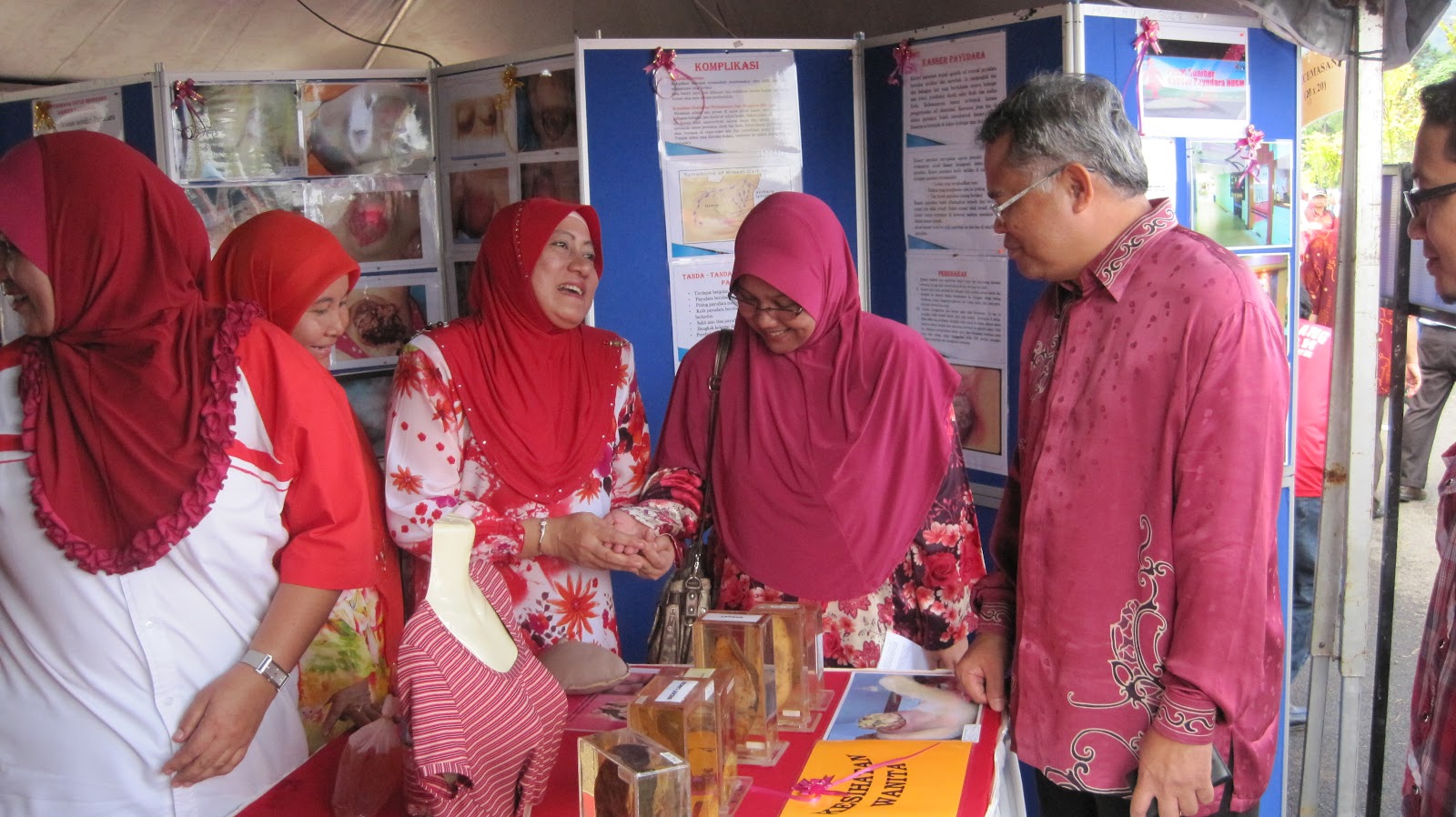
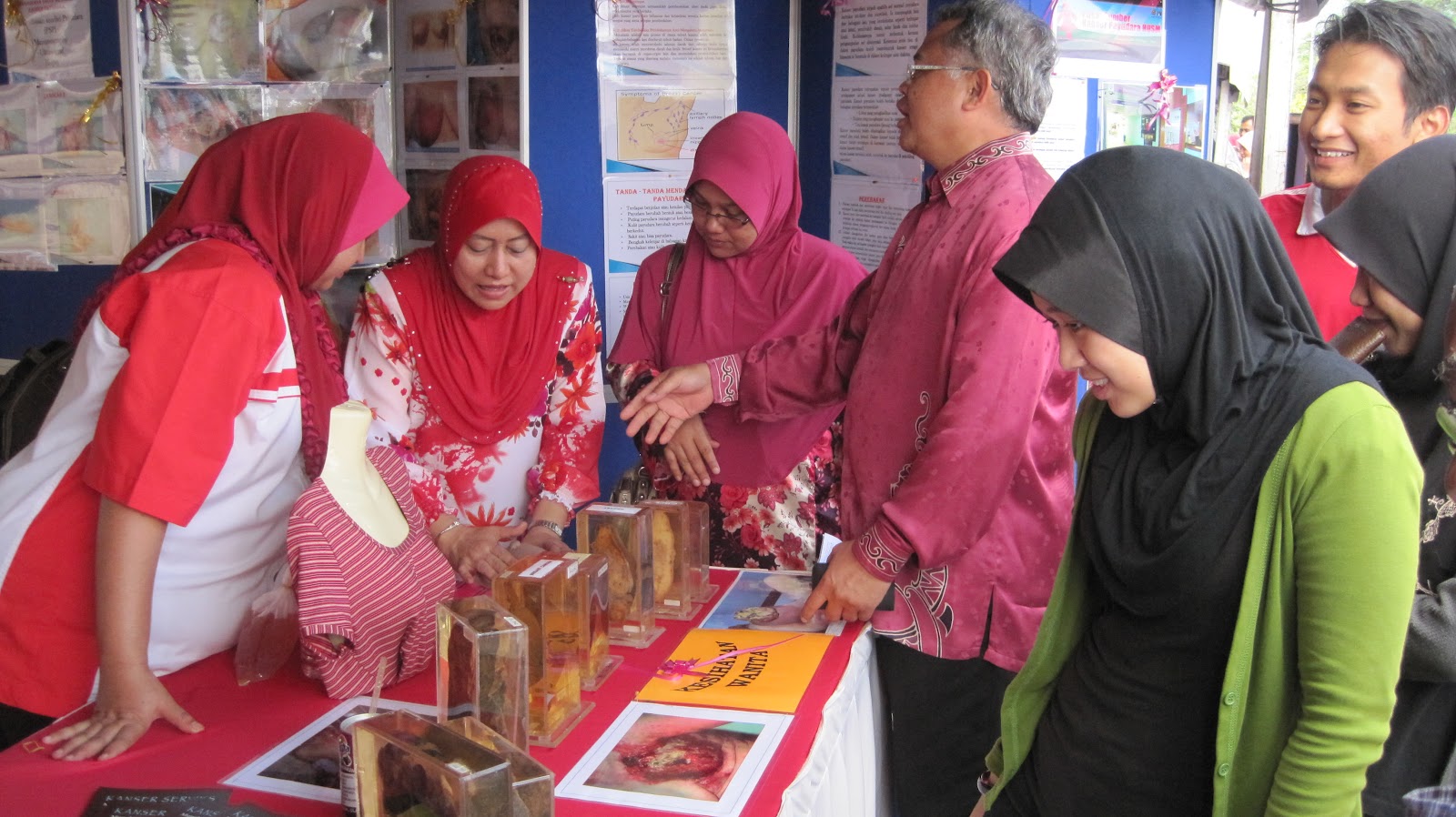
....dan bersamalah kita berkongsi keceriaan kami dalam melaksanakan Program Pengesanan Kanser Payudara bersama Pemimpin negara...